AI Study Assistant Tools Explained

It’s easy to dismiss artificial intelligence in education as just another buzzword. But spend even a few weeks using high-quality AI study tools, and it becomes clear we’re witnessing a shift in how students study, process information, and manage academic workloads.
As someone who has spent over a decade tutoring high school and college students, I’ve seen firsthand what works, what doesn’t, and how the emergence of AI has shaken up traditional study patterns.
This isn’t just about machines thinking for you. The best AI study assistant tools today are more like intelligent companions support systems that help students with everything from note-taking and summaries to scheduling, comprehension, and test prep. But there’s nuance. Some tools really do transform learning others can create over-reliance or misinformation if not used properly.
Let’s break it down.
What Are AI Study Assistant Tools?
At their core, AI study assistant tools are digital platforms that use artificial intelligence algorithms to support learning. These tools are specifically designed to mimic certain functions of a human tutor or study partner, like answering questions, simplifying complex topics, organizing notes, or generating quiz questions.
Here are some of the most common types of AI study tools you’ll find in 2026 and beyond:
- Note summarizers and highlighters, e.g., Scholarcy, SMMRY
- Flashcard generators, e.g., Quizlet AI features, Anki plug-ins
- Homework helpers and problem solvers, e.g., Socratic, Photomath, Wolfram Alpha
- Time and task managers with AI brains, e.g., Motion, Reclaim, Study Bunny
- All-in-one academic assistants, e.g., Grammarly for writing, Course Hero AI explainers
Some apps specialize in visuals, others work better with reading comprehension or explaining higher-order concepts in science and math.
How AI Tools Actually Help Students Learn
Let’s look beyond the techy jargon and examine this with real-world context. Imagine a high school junior named Maya tackling AP Biology, juggling extracurriculars, and prepping for the SAT. She’s totally swamped.
An AI study assistant helps her:
- Quickly summarize a 30-page textbook chapter using key bullet points and custom vocabulary lists.
- Generate flashcards from notes with definitions, visuals, and even real-world analogies.
- Plan her study week based on her school calendar, flagging high-priority tasks and recommending study blocks.
For students like Maya, AI doesn’t replace hard work it enhances it by removing academic friction.
Let’s be clear, though: the best results come when students actively use these tools with intention. Meaning, they check sources, they reinforce learning through repetition, and they balance AI insights with their own critical thinking.
The Psychology Behind Their Effectiveness

What makes AI so compelling for students isn’t just novelty it’s personalization and immediacy. For example, when a student inputs a topic they don’t understand, a smart assistant doesn’t just give a textbook explanation.
It adapts:
- Breaks ideas down into digestible chunks
- Provides alternative analogies
- Offers follow-up questions to test comprehension
This is similar to how an experienced tutor might pivot their teaching approach if they sense confusion. And that’s part of what makes these tools unique: they’re responsive.Also, there’s less stigma. Some students are too shy to admit they’re behind in class. They might avoid asking questions. With AI study tools, there’s no embarrassment in admitting “I don’t get this.” The digital assistant just helps over and over again, without judgment.
Limitations and Ethical Considerations
Despite their usefulness, AI study tools are not miracle workers. I’ve encountered multiple examples where a student received misleading or overly simplified information from one of these apps. It happens when the model is outdated or the content is too nuanced.
For example, a student using a homework-helper app for calculus might get the steps right but miss the why behind the formula. That’s a thin understanding, and it collapses under the pressure of exams.
There are ethical pitfalls, too. Platforms that generate full essays or solve questions without explanation may encourage academic dishonesty. That’s a lose-lose. The student skips the learning process, and eventually it catches up with them in higher-level courses or standardized tests.
Teachers and schools are catching on. Many now create more open-ended, discussion-based assessments that AI tools can’t handle easily. Students must balance AI use with integrity and independent thinking.
Best AI Study Assistant Tools Right Now
There’s no one-size-fits-all solution because each tool has its strengths. Still, based on personal use, student feedback, and testing by education professionals, here are five standouts:
- Notion AI is ideal for college students who need a workspace that combines notes, timelines, AI-generated summaries, and scheduling. Powerful for research-heavy courses.
- Quizlet AI Features: Automatically creates advanced-level flashcards and practice tests from uploaded content or scanned notes.
- Khan Academy’s Khanmigo: A teaching-consultant hybrid. Great for middle and high schoolers, offering Socratic-style questioning rather than just giving answers.
- Grammarly with AI: For writing assignments, research papers, and grammar feedback. The tone detector and logical flow suggestions are gold for students who struggle with clarity.
- Socratic by Google: Point your camera at a question, and it explains the logic or concept, not just the answer. Excellent for STEM help with real teaching intent.
None of these are magic pill. But when used alongside traditional study habits—active recall, spaced repetition, group discussions—they elevate academic performance dramatically.
The Future of AI in Education
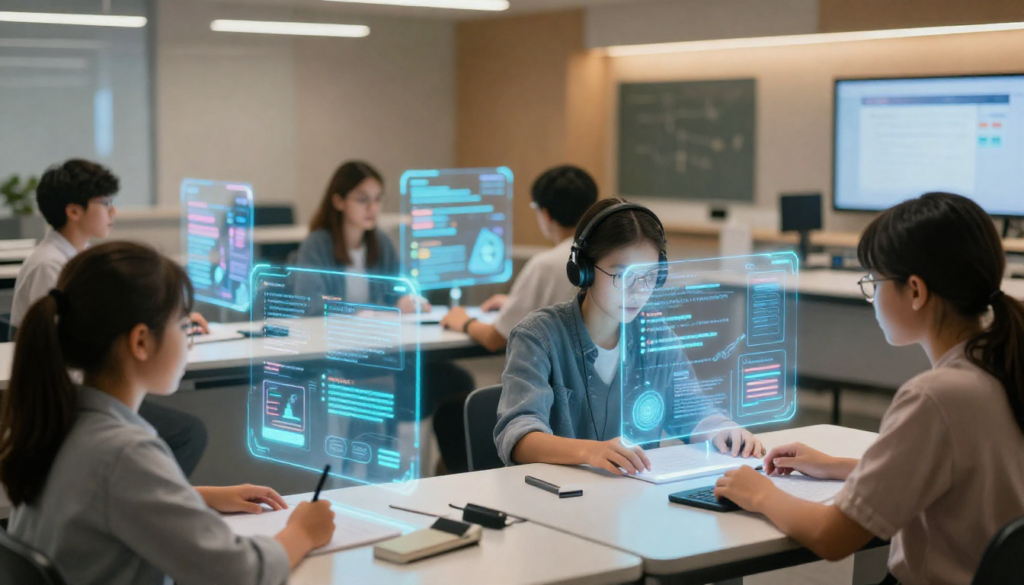
In the next 3 to 5 years, we’ll likely see these tools become fully integrated into digital classrooms and university portals. AI is moving beyond reactive responses and toward proactive learning guidance, reminding students what to review based on test history or suggesting varied revision techniques when learning stalls.
There’s also growing buzz around assistive learning companions, basically AI-driven avatars that can chat with you as a peer tutor, adapting their tone, energy, and style to your level. Think Duolingo’s practice buddy, but more academically versatile.
But the challenge remains ensuring these tools remain assistive, not substitutive. Students need foundational skills in critical thinking, source-checking, and synthesis. AI should support that effort, not shortcut it.
Final Thoughts
At their best, AI study assistant tools are like study superpowers, boosting focus, memory, organization, and understanding. They serve as tireless, personalized support systems in a world of overflowing information and limited time. But like any tool, their value depends on how you use them.
Parents should stay engaged, teachers should guide students on responsible use, and students themselves must treat AI not as a crutch, but as a partner. That’s where the real long-term gains lie.
FAQs
Q: Are AI study assistants safe to use in school?
Yes, for studying. But using them to complete assignments or cheat can breach academic integrity policies.
Q: Can AI replace tutors?
Not entirely. AI can supplement tutoring, but it lacks the emotional intelligence and adaptability of a good human educator.
Q: Which is the best AI tool for flashcard creation?
Quizlet’s AI flashcard feature is currently among the best for automated generation and spaced repetition.
Q: Will using AI make me lazy?
It can if you rely solely on it. But used actively and critically, it actually encourages better study habits.
Q: Is AI good for younger learners?
With guidance, yes. Tools like Khanmigo are designed to help middle and high schoolers grasp concepts safely.




Post Comment